
Custom signs for real estate offices aren't just about slapping your logo on a yard sign. They're a critical marketing tool that pulls in leads, builds brand recognition, and tells potential buyers you're professional and trustworthy. The right signage can sit in someone's neighborhood for weeks, working 24/7 on your behalf. This guide breaks down exactly what you need to know to get custom real estate signs that actually convert.
Why Custom Signs Matter for Real Estate
Real estate is hyper-local. A buyer driving through a neighborhood needs to know a property is listed, and they need to know it's YOU handling the sale. A generic or poorly designed sign gets ignored. A custom sign with your branding, clear contact info, and professional design stops traffic and generates calls.
Custom signage also establishes credibility. When your sign looks polished and branded consistently across all your listings, buyers perceive your brokerage as organized and legitimate. That perception translates to more showings and faster sales.
Here's the practical part: custom signs work for both individual agents and large brokerages. Whether you're running solo or managing 50 agents, Wholesale Signs & Printing and similar providers offer solutions that scale with your business without costing a fortune.
Essential Elements of a Real Estate Office Sign
Before you design anything, understand what goes on the sign. Every real estate sign needs these fundamentals:
- Your brokerage or agent name - Make it the largest text on the sign. This is your main branding moment.
- Logo - Consistent branding across all your signs builds recognition. Buyers start to remember you.
- Contact information - Phone number and website at minimum. Make the phone number large enough to read from a moving car.
- Property details - Address, price (optional), and status (Open House, Just Sold, Coming Soon).
- Call-to-action - "Call for a showing," "Visit us online," or similar language that encourages engagement.
The best signs balance all these elements without looking cluttered. White space is your friend. Buyers should understand what they're looking at within 3-5 seconds of seeing the sign from a car.
Sizing and Format Options for Real Estate Signs
Size matters. The standard professional yard sign size is 36 x 24 inches, and there's a reason this has become the industry standard. It's large enough to be visible from 50+ feet away but not so large that it feels aggressive or breaks neighborhood codes.
Beyond basic yard signs, you have other format options:
- Yard signs - The workhorse. 36 x 24 inches is your baseline.
- Riders - Smaller signs (like 18 x 24 inches) that attach to your main sign. Perfect for "Open House," "Sold," or "New Listing" announcements.
- Sign panels - Modular designs that let you swap out messaging without reprinting the entire sign.
- Shaped displays - Custom house, key, or arrow shapes for brokerages that want to stand out. These cost more but create lasting visual impact.
If you're managing a team of agents, standardized sizing keeps costs down.
Color Palette and Typography Choices
Your colors should match your brand. If your brokerage has established brand colors (blue, green, neutral tones), stick with them. Consistency across all your marketing - website, business cards, social media, and yard signs - reinforces your identity.
Here's what works in real estate signage:
- High contrast - Dark text on light background (or vice versa) ensures readability from distance. Avoid neon or overly trendy colors that date quickly.
- Two to three colors maximum - Simplicity wins. Too many colors look unprofessional and confuse the eye.
- Typography - Use clean, sans-serif fonts for your main headline (agent/brokerage name). A secondary serif font works for smaller details like the address or phone number, but keep it legible.
Test your design mock-up by viewing it at arm's length. If you can't read the phone number or agent name easily from that distance, the design isn't strong enough for a roadside sign.
Incorporating Logos and Branding

Your logo is your visual identity. Make sure it's sized appropriately on your sign so it's recognizable but doesn't overwhelm the sign's primary message (the property or listing).
For brokerages managing multiple agents, consider a tiered branding approach. Your main brokerage logo appears on every sign, with a smaller agent photo or name included. This reinforces the brokerage brand while giving individual agents visibility.
Professional design services matter here. If you're not a designer, don't try to force a blurry headshot or low-res logo onto your sign. It'll show, and it'll hurt your credibility. Custom artwork services are available without extra cost at most reputable sign shops, so take advantage of professional design expertise.
Design Tools and Customization Options
You don't need to be a graphic designer to create effective real estate signage anymore. Most sign providers offer online design tools where you can customize color, text, layout, and imagery in real time. You can upload your logo, swap photos, and adjust fonts without ever talking to a designer.
That said, templates are a starting point, not a limit. Real customization means you can move elements around, change messaging, or even create unique shaped designs if you want something that stands out in a crowded market.
Related: Custom Signs for Dental Offices: Design & Installation Guide
Related: Building Signs Santa Ana CA: Design & Install Guide
Related: Monument Signs in Torrance, CA: Design & Installation Guide
Related: Storefront Signs La Habra CA: Design & Installation Guide
Related: Storefront Signs Murrieta CA: Design & Installation Guide
Related: Lobby Signs Los Angeles CA: Design & Installation Guide
Related: Lobby Signs San Bernardino CA: Design & Install Guide
Related: Custom Signs for Office Lobbies: Design & Material Guide
Related: Custom Interior Wayfinding Signs: Design & Installation Guide
Related: Custom Banners for Trade Shows: Complete Buying Guide
Start with a template to save time. Templates give you a proven layout that works. Then customize it to match your brand and property details. If you're ordering in bulk (10+ signs), the per-unit cost drops significantly, so don't skimp on design quality to save a few dollars per sign.
Bulk Ordering and Cost Efficiency
Bulk orders are where custom signs become truly cost-effective. If you're a broker managing a team or an agent working multiple listings simultaneously, bulk ordering is non-negotiable.
Here's why: sign makers often charge less per sign on a larger order. That means 50 signs might cost you less per unit than ordering 5 signs individually. For brokerages, this scales your marketing without scaling your per-listing costs proportionally.
Plan ahead. Order signs for the quarter or year rather than one listing at a time. This also ensures color consistency and faster turnaround since you're not waiting for custom production each time you list a property.
Fast shipping is standard in the industry, so even bulk orders can be at your location within days. That gives you flexibility to order in volume without worrying about storage or timing issues.
Real Estate Sign Compliance and Regulations
Before you install any sign, understand local regulations. Homeowners associations (HOAs), municipalities, and local governments often have rules about sign size, placement, and duration. Some neighborhoods limit signs to specific sizes or require you to remove them within 30 days of closing a sale.
These rules vary wildly by location. A 36 x 24 inch sign might be legal in one county and oversized in another. Check with your local city or county planning department before placing orders. Many brokerages build this research into their onboarding process for new agents.
Violating sign regulations can result in fines or forced removal of signs, so it's worth the 15 minutes to verify before you invest in a bulk order. Your sign provider can usually help you understand standard sizes for your region.
Materials and Durability
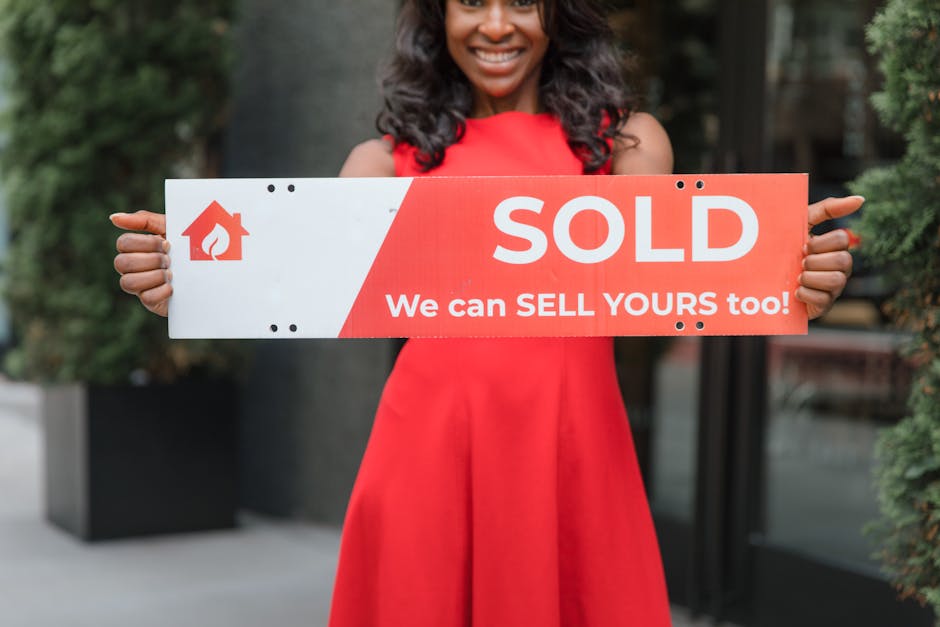
Real estate signs live outdoors. They face wind, rain, UV exposure, and casual vandalism. The material you choose determines how long your sign looks professional before fading or warping.
Corrugated plastic is the most common choice for real estate signs. It's lightweight, weather-resistant, affordable, and prints beautifully. Most real estate signs are made from this material because it hits the sweet spot between cost and durability.
If you want something more premium and long-lasting, aluminum composite or PVC boards offer superior durability. These materials won't warp in heat or crack in cold. They cost more upfront but last longer if you're reusing designs across multiple properties or seasons.
For temporary listings (a few weeks), corrugated plastic is fine. For permanent brokerage signage (your office entrance), invest in aluminum composite. It'll look professional longer and protect your brand image.
Getting Professional Design Help
If you're uncertain about design choices or you manage a large brokerage with many agents using inconsistent signs, professional design services take that burden off your plate. A designer who specializes in real estate signage understands what works for visibility, readability, and conversion.
Sign companies such as Wholesale Signs & Printing can prepare custom artwork for you. You describe what you want (or provide a general direction), and the designer creates mock-ups for your approval. This is faster than DIY templates and ensures a polished result.
Wholesale Signs & Printing
Get a Free Quote →For brokerages, standardized templates created by a professional designer can be applied across your entire team. Every agent uses the same base design with different property photos and details. This maintains brand consistency while allowing individual customization.
Installation and Placement Strategy
A beautiful sign doesn't work if it's placed where no one sees it. Visibility is everything in real estate marketing.
Optimal placement:
- Yard signs should be visible from both directions of the street.
- Place them at the property edge near the street, not in the middle of the lawn.
- Avoid placing signs behind parked cars, trees, or other obstructions.
- Install signs 3-4 feet high. Lower, and cars block views. Higher, and it looks odd.
- For office entrance signs, position them where foot traffic can see it from 20+ feet away.
If you're installing at an office entrance or commercial location, consider professional installation. A sign that's crooked or poorly mounted looks worse than no sign at all. First impressions matter, and your office sign is often the first thing a client sees.
Measuring Success: Tracking Sign Performance
How do you know if your custom signs are actually working? Track results.
Add a trackable phone number or QR code to your sign if possible. This lets you measure how many inquiries or visits come directly from signage. Ask clients how they found you. Keep notes on which listings got showing requests and correlate them with sign placement and visibility.
For brokerages, compare showing activity on listings with signs versus listings without visible signage. You'll quickly see the ROI. How much signs help depends on neighborhood traffic and competition.
This data also informs future sign investment. If shaped custom signs outperform standard rectangles in your market, invest more in unique shapes. If certain color combinations get more attention, use those in future designs.
Ordering Your First Batch of Custom Signs
Ready to design and order? Here's the workflow:
- Finalize your branding (logo, colors, fonts, agent names/contact info).
- Choose your size (36 x 24 is standard; adjust if local regulations differ).
- Decide on format (yard signs, riders, shaped, or combination).
- Use an online design tool or work with a designer to create mock-ups.
- Review proofs carefully. Check spelling, phone numbers, and layout.
- Calculate quantity based on your pipeline and bulk discounts.
- Place your order and allow time for production and shipping.
- Plan installation locations before signs arrive.
Most providers deliver within 5-10 business days for standard orders. Bulk orders might take slightly longer for production, but you'll save significantly on per-unit costs. Don't rush the design approval step - a proof review takes 20 minutes and prevents expensive reprints.
Common Questions About Real Estate Signage
What's the standard size for real estate yard signs?
The industry standard is 36 x 24 inches. This size balances visibility from a distance with local zoning compliance in most neighborhoods. Verify with your local municipality, as some areas require smaller or prohibit larger sizes. Your sign provider can advise on regional standards.
How long do custom signs last outdoors?
Corrugated plastic signs typically last 6-12 months of outdoor exposure before fading becomes noticeable. Aluminum composite or PVC materials last 2-3 years or longer. For temporary listing signs, corrugated plastic is fine. For permanent office or brokerage signage, upgrade to a more durable material.
Can I reuse signs for multiple listings?
Yes, if you use modular design. Keep your branding and agent info static, and swap out property-specific details (address, price, status) on replaceable panels or riders. This saves money on reprints and speeds up deployment across multiple listings. Talk to your designer about modular approaches.
Do I need a designer, or can I use templates?
Templates work fine as a starting point, especially for individual agents or small brokerages. For larger teams or if you want unique branding, professional design services ensure consistency and polish. Most sign providers offer custom artwork at no extra charge, so there's little reason to settle for a basic template if you have budget flexibility.
Wholesale Signs & Printing
Get a Free Quote →