If you run a business in Huntington Beach, you know foot traffic matters. But getting customers inside your door is only half the battle. Once they arrive, they need to know where to go. That's where wayfinding signs come in. These directional signs guide visitors through your space, reduce confusion, and make the experience smoother. Whether you manage a retail shop, medical office, restaurant or multi-tenant property, the right wayfinding signage pays for itself by improving customer satisfaction and reducing staff time spent giving directions.
What Are Wayfinding Signs and Why Huntington Beach Businesses Need Them
Wayfinding signs are interior and exterior signage systems designed to help people navigate a space. They include directional arrows, floor decals, lobby signs, restroom markers, parking indicators, and branded environmental graphics that tell visitors where to go without confusion.
Related: Interior Signs Riverside CA: Guide to Wayfinding & Lobby Displays
In a bustling beach city like Huntington Beach, where visitors and new customers constantly arrive, clear wayfinding is not a luxury—it's essential. Poor signage frustrates people, creates bottlenecks at the front desk, and can even expose your business to liability if someone gets lost or injured trying to find an exit.
Related: Banner Printing in Huntington Beach, CA: A Local Business Guide
Related: Large Format Printing in La Habra, CA: A Guide for Local Businesses
Good wayfinding also reinforces your brand. When your directional signs match your interior design and use your brand colors and fonts, they feel intentional and professional. That consistency builds trust and makes your space feel more organized, even if you're operating in a compact footprint.
Types of Wayfinding Signs for Huntington Beach Locations
Wayfinding isn't one-size-fits-all. Different businesses need different sign types depending on their layout, industry and customer flow.
Related: Wayfinding Signs in Murrieta, CA: Guide for Business Owners
Related: Monument Signs Irvine CA: A Guide to Entry Signs for Businesses
Directional Signs: These are the workhorses of any wayfinding system. They use arrows and text to point visitors toward bathrooms, exits, elevators, waiting areas, offices or other key zones. Directional signs work best when they're mounted at eye level and placed at decision points—places where visitors naturally pause or turn.
Lobby and Welcome Signs: A clear, branded sign at your entrance sets the tone and tells people they're in the right place. Lobby signs can include your business name, logo, and initial directions like "Please check in at the desk" or "Elevator to 2nd floor."
ADA-Compliant Signs: If your business is open to the public, accessibility law requires signage that meets specific standards. This includes raised lettering, Braille, high-contrast colors, and proper sizing. ADA signs aren't just legal protection—they signal that your space welcomes everyone.
Floor Decals and Wayfinding Markers: On concrete, tile or carpet, floor decals guide traffic flow and highlight routes during emergencies. They're especially useful in retail spaces, warehouses, and medical offices where visual flow matters.
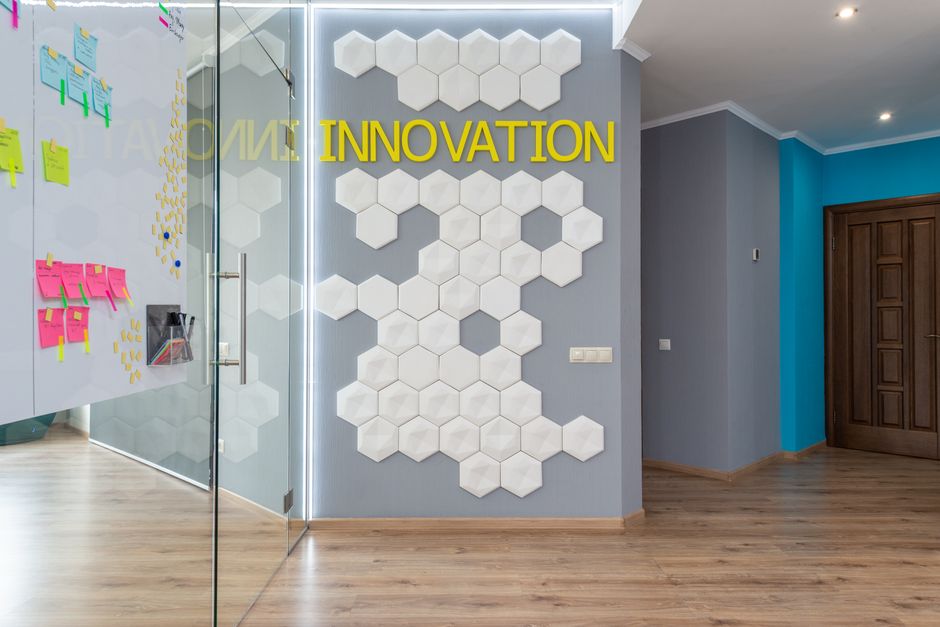
Branded Environmental Graphics: These are large-format wall graphics, murals or dimensional letters that blend wayfinding with branding. A Huntington Beach restaurant might use a beach-themed graphic on the wall pointing to the patio. A medical office might use calming colors and imagery to guide patients through the space while reducing anxiety.
How to Plan Wayfinding Signs for Your Space
Before you order anything, walk through your space as a first-time visitor. Where do new people naturally look for information? Where do they get stuck or confused? What questions do they ask your staff most often?
Start by mapping your customer journey. If you run a dental practice, patients arrive at the front door, check in at the desk, wait, go back to an operatory, then find the restroom and exit. Each transition point is a place where a sign can help. If you manage a multi-tenant property in Huntington Beach, you need lobby signs, floor directories, suite number signs, and clear parking instructions.
Keep it simple. Too many signs create visual noise and actually confuse people more. Choose the absolute essential directions and use consistent fonts, colors and mounting heights throughout your space.
Use your brand. Wayfinding is not generic utility signage. It's an extension of your brand. Use your logo, brand colors, and design language wherever possible. This creates a cohesive, professional look and reinforces who you are every time a visitor moves through your space.
Think about lighting. Interior wayfinding often needs to work in different lighting conditions. If your space has windows, you might need matte finishes to avoid glare. In dimly lit areas, reflective or backlit signs become critical for visibility and safety.
Plan for maintenance and updates. Wayfinding signs get scuffed, faded, and outdated. Choose durable materials—aluminum, vinyl, acrylic—that can take a hit and still look good. If your hours, services or suite numbers change, make sure your signs are easy to update.
Materials and Durability for Huntington Beach Environments

Huntington Beach weather—sun, salt air, moisture—can break down signage faster than you'd expect. Material choice matters.
Vinyl and Acrylic: These are durable, affordable, and easy to maintain. Vinyl is ideal for floor decals and window graphics. Acrylic works well for interior directional signs and lobby displays. Both resist fading and are waterproof.
Aluminum: If you're mounting signs on exterior walls or in high-traffic areas, aluminum frames and backing provide structural integrity and a professional appearance. Aluminum also holds up to Huntington Beach's coastal climate.
Dimensional Letters and Logos: For a higher-end look, dimensional metal or acrylic letters and logos create depth and draw attention. These work especially well as branded wayfinding elements in modern offices or hospitality spaces.
Digital Displays: Some businesses use digital wayfinding—screens that update in real time to show floor maps, event schedules, or directional information. These are more complex and require power and IT support, but they're flexible and can reduce printed sign clutter.
When you're choosing materials, think about your maintenance budget. High-visibility vinyl and aluminum signs require less upkeep than materials that scratch or fade easily. Wholesale Signs & Printing can help you select durable materials that match your brand and your budget for the long term.
Wholesale Signs & Printing
Get a Free Quote →Installation and Professional Wayfinding Design in Huntington Beach
DIY wayfinding often looks it. Crooked signs, mismatched fonts, poor color choices, and awkward mounting undermine your brand and confuse visitors just as much as no signage at all.
Professional wayfinding design starts with a site assessment. A designer walks your space, understands your traffic flow, learns your brand standards, and maps out a system that's visually consistent and functionally clear. This design phase prevents costly mistakes and ensures every sign earns its place.
Professional installation matters too. Signs need to be mounted at the right height, securely fastened, and positioned where they're actually visible. A sign hidden behind a pillar or mounted too high to read isn't wayfinding—it's wasted money.
In Huntington Beach, where many businesses operate in leased spaces, you also need signage that can be installed without permanent building damage. Adhesive-backed vinyl, magnetic mounts, and removable hardware let you create professional wayfinding without violating your lease.
Wholesale Signs & Printing handles the entire process: design consultation, material selection, fabrication, and professional installation. You get a cohesive wayfinding system that works, looks polished, and reflects your brand the moment customers walk in the door.
Wayfinding Signage and Compliance
If your business is open to the public, you need to meet accessibility standards. In California, that means ADA-compliant signs in certain locations: exits, restrooms, stairwells, elevators, and any area with hazards.
ADA signage requirements are strict: specific letter heights, contrast ratios, Braille placement, and tactile elements. Getting this wrong opens your business to complaints and potential legal action. Getting it right shows you take accessibility seriously and welcome all customers.
Beyond accessibility, Huntington Beach has its own design guidelines for certain areas. The city's planning or building department sets the rules for signage in different zones. Before you install wayfinding signs, confirm the local requirements with the city. Professional sign designers stay current on these rules and build compliance into their work from the start.
Common Wayfinding Mistakes to Avoid

Overcomplicated Systems: Wayfinding that uses too many colors, fonts, or sign types confuses people. Stick to a clear visual hierarchy and consistent design language throughout your space.
Poor Placement: Signs placed at the wrong height, around corners, or behind obstacles might as well not exist. Put directional signs where they answer a question before your visitor gets lost.
Outdated Information: A sign pointing to a department that moved six months ago erodes customer trust. Keep your wayfinding current or remove it.
Mixing Brands: If your wayfinding uses different fonts, colors, or styles than your logo and interior design, it looks like an afterthought. Wayfinding should feel like part of your brand identity, not a separate utility.
Ignoring Lighting: Wayfinding that works in daylight might be invisible at night. Plan for different lighting scenarios and choose materials and finishes accordingly.
Getting Your Wayfinding Signs Made and Installed
The process typically starts with a consultation. You describe your space, your brand, and your biggest navigation pain points. The designer asks questions: How many visitors do you get? What are they looking for? Do you have accessibility requirements? What's your timeline?
Next comes design and layout. You'll see mockups, material samples, and placement diagrams. This is your chance to catch mistakes before production starts. Good designers build in rounds of revision so you get exactly what you need.
Once the design is approved, the signs are fabricated using the materials you've chosen. Then comes professional installation. Installers use the right hardware, mounting methods, and tools to ensure every sign is secure, level, and visible.
After installation, your system is complete. Most signage is designed to be low-maintenance, but it's worth asking your installer about care tips—how to clean different materials, when to schedule maintenance, and what to do if a sign gets damaged.
If you're ready to create a wayfinding system that actually works, Wholesale Signs & Printing offers free design consultation and can walk you through the entire process, from concept to installation.
FAQs About Wayfinding Signs in Huntington Beach
How much do wayfinding signs cost?
Cost depends on the number of signs, size, materials, complexity of design, and whether installation is included. A simple directional sign costs much less than a complete branded wayfinding system for a large space. To get an accurate estimate for your specific needs, request a free quote from a professional sign company that understands your space and can recommend the right approach.
How long does it take to design and install wayfinding signs?
Timeline varies based on design complexity, approval rounds, material availability, and installation logistics. A single directional sign might be ready in days. A full wayfinding system for a multi-tenant property might take several weeks from initial consultation to final installation. Discuss your timeline during your consultation so the designer can plan accordingly.
Do wayfinding signs have to be ADA-compliant?
If your business is open to the public, certain wayfinding signs must meet ADA standards—specifically signs for exits, restrooms, stairs, elevators, and hazard warnings. Other interior signage may not require full ADA compliance, but it's smart to apply accessible design principles throughout for consistency and inclusivity. Confirm your specific obligations with Huntington Beach's building department.
Can I update wayfinding signs if my space layout changes?
Yes. If you choose durable, modular materials like vinyl decals, aluminum frames, or magnetic mounts, many signs can be updated or replaced without replacing the entire system. Professional installers can remove and reinstall signs with minimal disruption. When you're designing your initial system, ask about options for future updates so you're not locked into permanent solutions.
Wholesale Signs & Printing
Get a Free Quote →